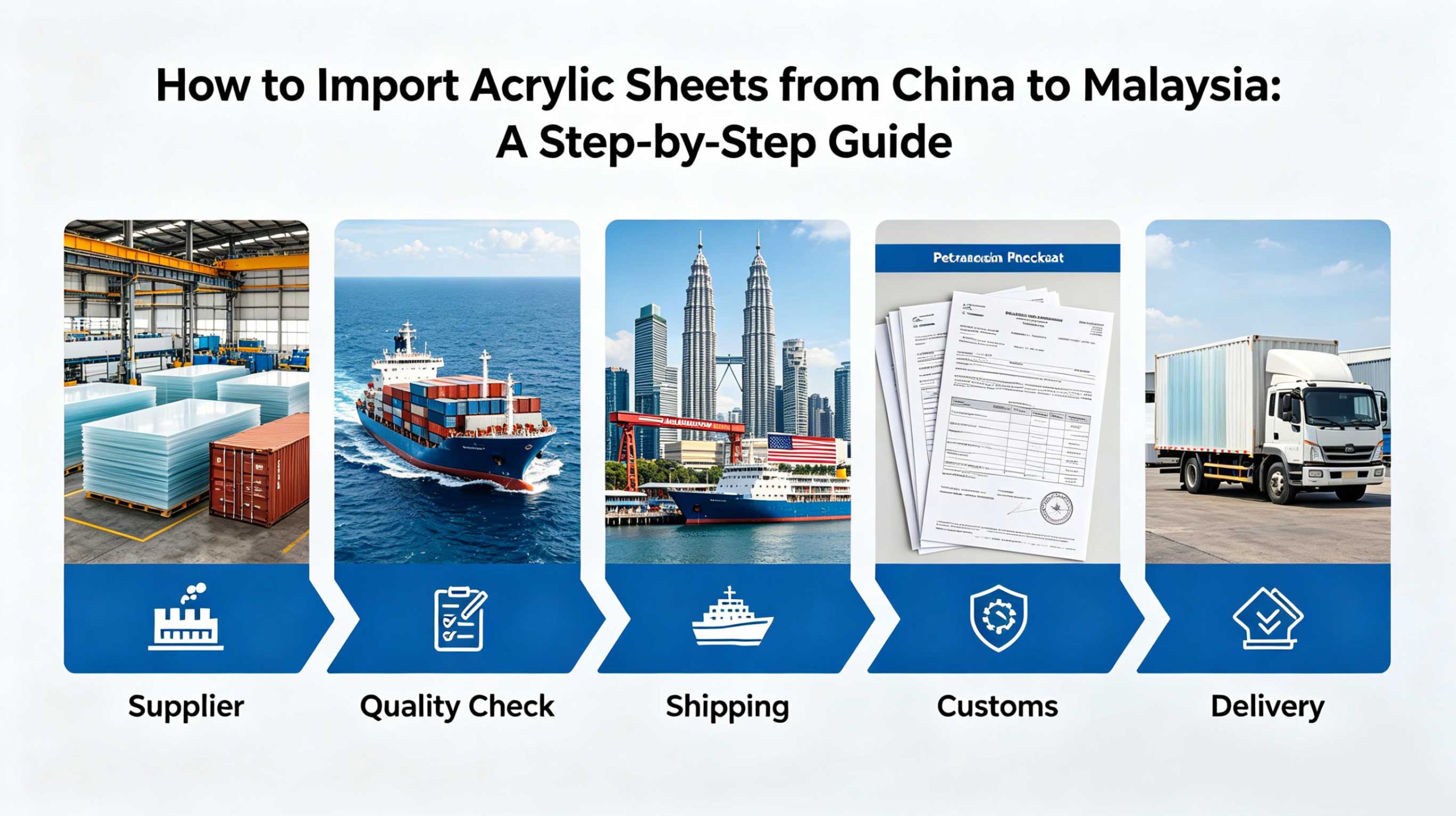
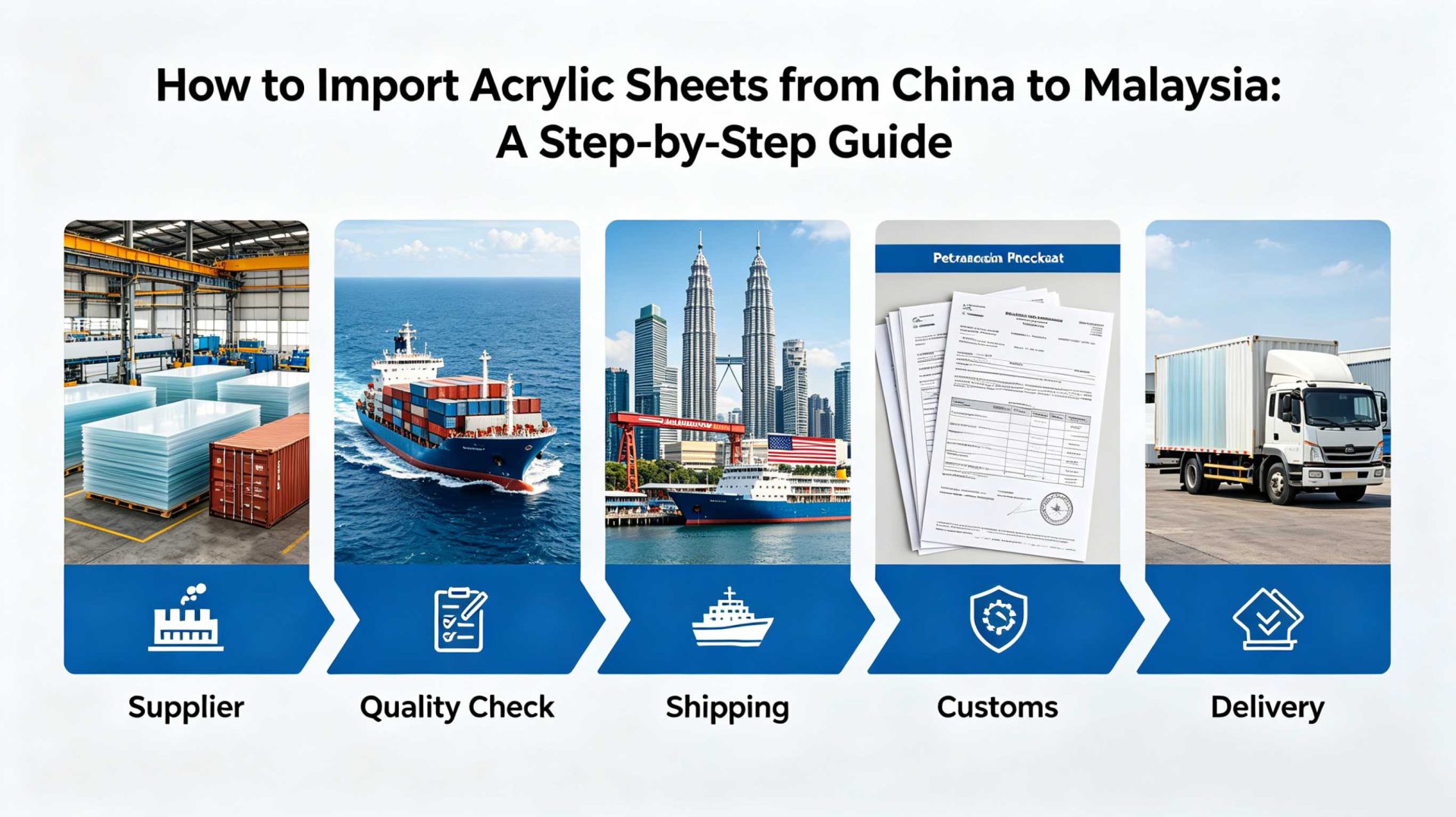
For businesses in Malaysia looking to source acrylic sheets in large quantities at competitive prices, importing directly from China acrylic sheet manufacturers is an increasingly popular and cost-effective strategy. China is the world’s largest producer of acrylic (PMMA) sheets, offering a vast range of types, thicknesses, and qualities to meet the demands of the Malaysian market, from outdoor acrylic signageto high-end interior design.
However, the import process can seem daunting for first-timers, involving complex steps like supplier verification, quality control, shipping logistics, and customs clearance. This comprehensive, step-by-step guide will walk you through the entire process of importing acrylic sheets from China to Malaysia, helping you navigate potential pitfalls and ensure a smooth, successful transaction.
1. Understand the Market and Define Your Requirements
Before you start contacting suppliers, it’s crucial to have a clear understanding of your needs and the Malaysian market’s expectations.
Product Specifications:
Type: Will you importcast acrylic sheet (better for outdoor use, signage) or extruded acrylic sheet (cheaper, better for indoor use)?
Thickness: Common ranges are 1mm to 50mm.
Size: Standard sheets are 1220mm x 2440mm (4ft x 8ft), but custom sizes are possible.
Color & Finish: Clear, colored, frosted, mirrored, or opal white for light boxes.
Special Features: For the Malaysian climate, UV resistance is critical for outdoor applications. You may also need fire-retardant or anti-scratch sheets.
Quantity: Determine your order volume. Most Chinese manufacturers have a Minimum Order Quantity (MOQ), often a full 20-foot or 40-foot container.
Budget: Calculate your budget, including the cost of goods, shipping, customs duties, taxes, and other miscellaneous fees.
2. Find and Verify Reliable China Acrylic Sheet Manufacturers
The foundation of a successful import business is a trustworthy supplier.
Where to Find Suppliers:
Online B2B Platforms: The most popular are Alibaba.com and Made-in-China.com. These platforms allow you to filter suppliers by product, MOQ, location, and certification.
Trade Shows: Attend international trade fairs like the Canton Fair (held in Guangzhou, China) or PlasChina to meet suppliers in person, see product samples, and establish direct relationships.
Professional Directories: Use industry-specific directories or ask for referrals from other businesses in the plastics or signage industry.
How to Verify a Supplier:
Check Certifications: Ensure the supplier has necessary certifications, such as ISO 9001 (for quality management) and SGS (for product safety and compliance). For acrylic sheets sold in Malaysia, ensure they meet SIRIM standards if required.
Request Samples: Always order product samples before placing a bulk order. This allows you to check the quality, thickness, clarity, and UV resistance of the acrylic.
Visit the Factory (if possible): For large, long-term orders, consider a factory visit to assess production capabilities, quality control processes, and working conditions.
Check References: Ask the supplier for references from other Malaysian or international clients and contact them to inquire about their experience.
3. Negotiate Terms and Sign the Contract
Once you’ve selected a supplier, it’s time to negotiate the terms of your purchase.
Key Negotiation Points:
Price: Negotiate the FOB (Free On Board) price, which is the cost of the goods loaded onto the ship at the Chinese port.
Payment Terms: Common terms include T/T (Telegraphic Transfer) (e.g., 30% deposit, 70% balance before shipment) or L/C (Letter of Credit) (a more secure method for both parties, but with higher fees).
Delivery Time: Agree on a production and delivery schedule.
Quality Control (QC): Define the QC standards and inspection process. This is critical. Many buyers hire a third-party inspection company (like SGS or BV) to inspect the goods in China before shipment.
Sign the Contract: Once all terms are agreed upon, sign a formal sales contract with the supplier. The contract should clearly state all agreed-upon terms, including product specifications, quantity, price, payment terms, delivery time, and QC standards.
4. Arrange Shipping and Logistics
This is one of the most complex parts of the import process. You can handle it yourself or hire a Freight Forwarder to manage the logistics for you.
Incoterms: The contract will specify the Incoterms (International Commercial Terms), which define the responsibilities of the buyer and seller for the delivery of the goods. For sea freight, common Incoterms include:
FOB (Free On Board): You (the buyer) are responsible for shipping and insurance from the Chinese port onwards.
CIF (Cost, Insurance, and Freight): The supplier is responsible for shipping and insurance to the destination port in Malaysia.
CFR (Cost and Freight): Similar to CIF, but you (the buyer) are responsible for insurance.
Port Selection:
Port of Loading (POL): In China, major ports for acrylic sheet exports include Ningbo, Shanghai, Guangzhou (Huangpu), and Shenzhen (Yantian).
Port of Discharge (POD): In Malaysia, the main entry ports are Port Klang (near Kuala Lumpur) and Port of Tanjung Pelepas (PTP) (near Johor Bahru).
Customs Documentation: Prepare the necessary documents for customs clearance in Malaysia, including:
Bill of Lading (B/L): A document issued by the carrier (shipping line) that serves as a receipt for the goods and a contract of carriage.
Commercial Invoice: A document from the supplier detailing the goods sold, their value, and the terms of sale.
Packing List: A document detailing the contents of each package.
Certificate of Origin: A document certifying that the goods originated in China.
Inspection Certificate: A document from a third-party inspection company verifying the quality of the goods.
Import License: Check if an import license is required from the Malaysian Ministry of International Trade and Industry (MITI). For acrylic sheets, it’s generally not required, but it’s best to confirm.
5. Customs Clearance and Delivery in Malaysia
Once your shipment arrives at the Malaysian port, it must clear customs before it can be released to you.
Customs Clearance Process:
Submit Documents: Your freight forwarder or customs broker will submit the required documents to the Royal Malaysian Customs Department.
Pay Duties and Taxes: You will need to pay import duties and Goods and Services Tax (GST). The Harmonized System (HS) code for acrylic sheets is 3920.51. The current import duty rate is 0% (under the ASEAN-China Free Trade Agreement, ACFTA, for goods with a valid Certificate of Origin), and the GST rate is 6%.
Inspection (if required): Customs may inspect the goods to verify their contents and value.
Delivery: After customs clearance, the goods will be released, and you can arrange for delivery to your warehouse or premises in Malaysia.
6. Post-Delivery Inspection and After-Sales Service
Inspect the Goods: Upon receipt of the goods, inspect them carefully to ensure they match the specifications in the contract and that there is no damage during transit.
Resolve Discrepancies: If there are any discrepancies or damage, contact the supplier immediately and provide photographic evidence. A good supplier will have a clear after-sales service policy to address such issues.
Conclusion
Importing acrylic sheets from China to Malaysia can be a highly profitable venture for businesses, offering access to a wide range of high-quality products at competitive prices. By following this step-by-step guide, you can navigate the import process with confidence, from finding a reliable supplier to delivering the goods to your door in Malaysia.
Remember, due diligence is key. Take the time to verify suppliers, negotiate clear terms, and understand the logistics and customs requirements. With careful planning and execution, importing from China can become a core part of your business strategy, helping you to grow and succeed in the Malaysian market.