Address
304 North Cardinal
St. Dorchester Center, MA 02124
Work Hours
Monday to Friday: 7AM - 7PM
Weekend: 10AM - 5PM
Address
304 North Cardinal
St. Dorchester Center, MA 02124
Work Hours
Monday to Friday: 7AM - 7PM
Weekend: 10AM - 5PM


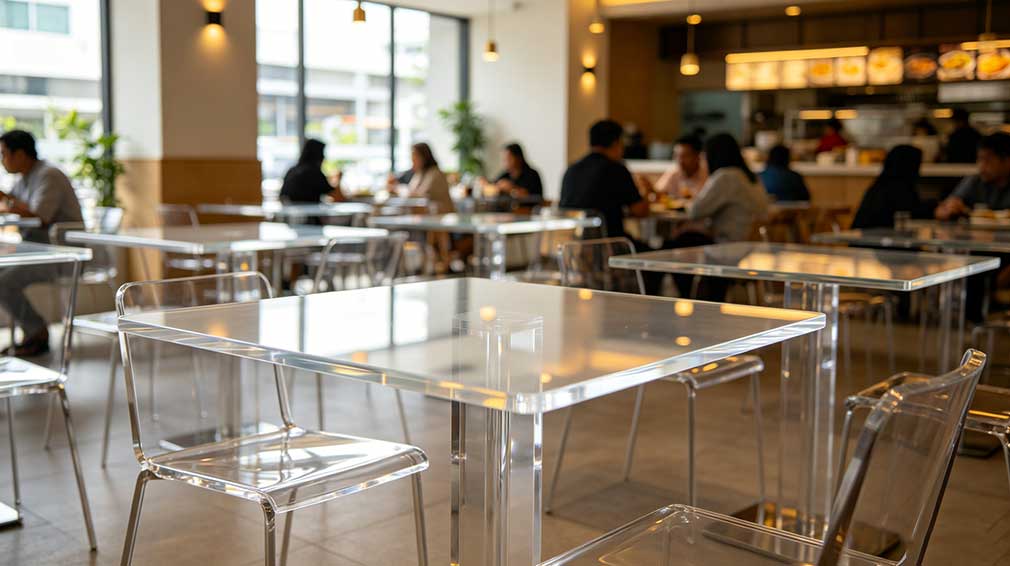
In the competitive and vibrant restaurant industry of Malaysia, choosing the right materials for furniture is crucial for ensuring durability, functionality, and aesthetic appeal. PMMA (Polymethyl Methacrylate), commonly known as acrylic, has emerged as a popular choice for restaurant table tops due to its versatility, clarity, and resistance to the elements. However, one common question that arises is: What thickness PMMA board is recommended for restaurant table tops in Malaysia?
The recommended thickness of PMMA board for restaurant table tops in Malaysia typically ranges from 12mm to 20mm, with 15mm being the most commonly used and versatile option. This article will explore the factors that influence the choice of PMMA board thickness, discuss the benefits of different thicknesses, and provide guidance on selecting the right thickness for your restaurant table tops in Malaysia.
The size of the table and the span between the table legs or supports are important factors to consider when determining the required thickness of the PMMA board. Larger tables with longer spans between supports will require thicker PMMA boards to ensure structural stability and prevent sagging or bending over time.
For example, a small café table with a diameter of 60cm and four legs will require a thinner PMMA board than a large rectangular dining table with a length of 2m and only two legs. The longer span between the legs of the larger table will put more stress on the table top, requiring a thicker and more rigid PMMA board to maintain its shape and stability.
The level of usage and the potential for impacts are also important considerations when choosing the thickness of PMMA board for restaurant table tops. In a busy restaurant with high foot traffic and frequent use, the table tops will be subjected to more wear and tear, as well as accidental impacts from plates, glasses, and other objects.
Thicker PMMA boards are generally more resistant to impacts and are less likely to crack or shatter due to accidental bumps or collisions. They are also more durable and less prone to scratching or scuffing, which can help to maintain the appearance of the table tops over time.
The thickness of the PMMA board can also have an impact on the aesthetic appearance of the restaurant table tops. Thicker PMMA boards may appear more substantial and robust, while thinner PMMA boards may appear more delicate and lightweight.
The choice of thickness should be based on the overall design aesthetic of the restaurant and the desired look and feel of the table tops. For example, a minimalist or modern design aesthetic may call for thinner PMMA boards to create a sleek and unobtrusive look, while a more traditional or rustic design aesthetic may benefit from thicker PMMA boards to create a more substantial and durable look.
The cost of PMMA board increases with thickness. Thicker PMMA boards are generally more expensive than thinner PMMA boards, both in terms of material cost and installation cost.
When choosing the thickness of PMMA board for restaurant table tops, it’s important to balance the need for strength, durability, and aesthetic appeal with the available budget. While it may be tempting to choose a thinner PMMA board to save money, it’s important to ensure that the chosen thickness is sufficient to meet the functional requirements of the table tops and to withstand the level of usage in the restaurant.
Based on the factors discussed above, the following are the recommended PMMA board thicknesses for restaurant table tops in Malaysia:
PMMA boards with a thickness of 12mm to 15mm are suitable for most restaurant table top applications in Malaysia. They offer a good balance of strength, durability, and cost-effectiveness, and are capable of supporting table tops up to approximately 1.2m in width or diameter with proper leg support.
These thicknesses are ideal for creating table tops in small to medium-sized restaurants, cafes, and bistros. They are also suitable for use in outdoor dining areas, as they are resistant to weathering and UV radiation.
PMMA boards with a thickness of 15mm to 20mm are recommended for larger or heavier table tops, as well as for applications that require a higher level of impact resistance. These thicknesses are capable of supporting table tops up to approximately 1.5m in width or diameter with proper leg support.
These thicknesses are ideal for creating table tops in large restaurants, banquet halls, and event spaces. They are also suitable for use in high-traffic areas or in restaurants where there is a higher risk of accidental impacts.
PMMA boards thicker than 20mm are generally not necessary for most restaurant table top applications in Malaysia. They are significantly more expensive and heavier than thinner PMMA boards, and may require specialized installation techniques and additional structural support.
However, in some rare cases, such as for very large or heavy table tops or for applications that require an extremely high level of impact resistance, it may be necessary to use PMMA boards thicker than 20mm. In such cases, it’s recommended to consult with a professional furniture designer or engineer to determine the appropriate thickness and to ensure the structural integrity of the table tops.
PMMA boards are highly durable and long-lasting, making them an ideal choice for restaurant table tops in Malaysia. They are resistant to impact, weathering, and UV radiation, and are less prone to scratching or scuffing than other materials like glass or wood.
With proper care and maintenance, PMMA table tops can last for many years, making them a cost-effective investment for restaurant owners.
PMMA table tops are relatively easy to maintain, which is a significant advantage for restaurant owners. They can be cleaned with a soft, lint-free cloth and a mild soap solution or a specialized acrylic cleaner, which helps to remove dust, dirt, and other contaminants that can accumulate on the surface of the table tops.
Unlike some other materials, PMMA table tops do not require special coatings or treatments to maintain their appearance and performance. With regular cleaning and maintenance, they will continue to look their best for many years to come.
PMMA boards are highly versatile and customizable, which makes them suitable for a wide range of restaurant table top designs. They are available in a wide range of colors, including clear, frosted, and opaque, as well as in various finishes, such as glossy, matte, and textured. This allows restaurant owners to create table tops that perfectly match their restaurant’s design aesthetic and brand identity.
In addition, PMMA boards can be easily cut, shaped, and formed into almost any size or shape, making them suitable for both standard and custom acrylic table top designs. Whether a restaurant owner needs a simple rectangular table top or a complex, custom-shaped table top, PMMA boards can be tailored to their exact specifications.
PMMA table tops are hygienic and safe, which is an important consideration for restaurant owners. They are non-porous, which means that they do not absorb liquids or food particles, making them less likely to harbor bacteria or other microorganisms. This makes them easier to clean and sanitize, ensuring a safe and healthy dining environment for customers.
PMMA is also a safe material to use in restaurants, as it is non-toxic and does not emit harmful chemicals or fumes. This makes it a suitable choice for use in areas where food is prepared and served.
When choosing PMMA boards for restaurant table tops, it’s important to select high-quality boards from a reputable acrylic manufacturer or supplier. High-quality PMMA boards are more durable, have better optical clarity, and are less prone to yellowing or discoloration over time.
Look for PMMA boards that are manufactured with UV stabilizers, especially if the table tops will be used outdoors or in areas with direct sunlight. UV stabilizers help to prevent yellowing and loss of clarity, ensuring that the table tops remain clear and vibrant for many years to come.
There are two main types of PMMA boards available: cast acrylic boards and extruded acrylic boards. Cast acrylic boards are generally more durable, have better optical clarity, and are more resistant to yellowing and discoloration than extruded acrylic boards. They are also more expensive than extruded acrylic boards.
Extruded acrylic boards are less expensive and are suitable for most restaurant table top applications. However, they may not be as durable or have the same level of optical clarity as cast acrylic boards.
When choosing the type of PMMA board, consider the specific requirements of the table tops, as well as the available budget. For most restaurant table top applications in Malaysia, extruded acrylic boards with a thickness of 12mm to 15mm are sufficient. However, if a higher level of durability or optical clarity is required, cast acrylic boards may be a better choice.
Proper installation is essential for ensuring the performance and longevity of restaurant table tops using PMMA boards. It’s recommended to hire a professional installer who has experience installing PMMA table tops and who can ensure that the table tops are installed correctly and securely.
During installation, it’s important to ensure that the PMMA boards are properly supported and that there are no gaps or spaces between the PMMA boards and the table legs or supports. This will help to prevent the PMMA boards from warping or bending over time and will ensure that the table tops are stable and safe for use.
To ensure the long-term durability and performance of restaurant table tops using PMMA boards, it’s important to maintain them regularly. Clean the table tops with a soft, lint-free cloth and a mild soap solution or a specialized acrylic cleaner, which helps to remove dust, dirt, and other contaminants that can accumulate on the surface of the table tops.
Periodically inspect the table tops for any signs of damage, such as scratches, cracks, or loose fittings. If any signs of damage are noticed, take immediate action to repair or replace the affected parts to prevent further deterioration.
In conclusion, the recommended thickness of PMMA board for restaurant table tops in Malaysia typically ranges from 12mm to 20mm, with 15mm being the most commonly used and versatile option. The specific thickness will depend on factors such as the table size and span, the level of usage and impact resistance required, aesthetic considerations, and cost considerations.
PMMA boards offer numerous benefits for restaurant table tops in Malaysia, including durability and longevity, easy maintenance, versatility and customizability, and hygienic and safe. By choosing the right thickness of PMMA board and ensuring proper installation and maintenance, restaurant owners can create table tops that are not only functional and durable but also aesthetically pleasing and long-lasting.
So, if you’re a restaurant owner in Malaysia planning to install new table tops or upgrade existing ones, consider using PMMA boards. With their versatility, durability, and aesthetic appeal, they are an excellent choice for creating a modern and inviting dining environment for your customers.
