Address
304 North Cardinal
St. Dorchester Center, MA 02124
Work Hours
Monday to Friday: 7AM - 7PM
Weekend: 10AM - 5PM
Address
304 North Cardinal
St. Dorchester Center, MA 02124
Work Hours
Monday to Friday: 7AM - 7PM
Weekend: 10AM - 5PM

For businesses and buyers in Malaysia, the cost of materials is a critical factor in procurement decisions. When it comes to acrylic sheets, a common question arises: Are standard 1220*2440 acrylic sheets cheaper than custom sizes for Malaysian buyers? The answer is almost always a resounding yes. Standard-sized sheets benefit from economies of scale, streamlined production, and efficient logistics, making them significantly more cost-effective than custom alternatives. This article will explore the reasons behind this cost difference and help Malaysian buyers make informed decisions.
The primary reason standard 1220*2440 acrylic sheets are cheaper is due to economies of scale. Acrylic manufacturers produce standard-sized sheets in massive quantities. This high-volume production allows them to spread their fixed costs—such as machinery, labor, and energy—over a larger number of units. As a result, the cost per unit for a standard sheet is drastically lower than for a custom-sized one, which is produced in much smaller quantities.
For example, a Chinese acrylic factory might produce several thousand standard 1220*2440 acrylic sheets in a single production run. This efficiency drives down the cost, which is then passed on to the buyer, whether they are a wholesale acrylic distributor or a direct importer in Malaysia.
The production line for standard 1220*2440 acrylic sheets is highly optimized and automated. From the initial extrusion or casting of the acrylic material to the final cutting and packaging, every step is designed for maximum efficiency with minimal waste.
In contrast, producing custom acrylic sheets requires reconfiguring the production line, which takes time and incurs additional costs. Custom orders may also involve manual cutting or finishing, which is slower and more labor-intensive than automated processes for standard sizes. These inefficiencies directly translate to higher costs for the buyer.
Standardization also minimizes material waste. Acrylic sheets are large, and cutting them to a non-standard size often results in significant off-cuts that cannot be used for other projects. These off-cuts represent a loss of material and, consequently, a loss of money for the manufacturer. To offset this waste, manufacturers charge a premium for custom sizes.
With standard 1220*2440 acrylic sheets, the cutting process is precise and optimized. The resulting off-cuts are often uniform and can be sold as smaller, standard-sized pieces or used for other internal purposes, further reducing the overall cost per sheet.
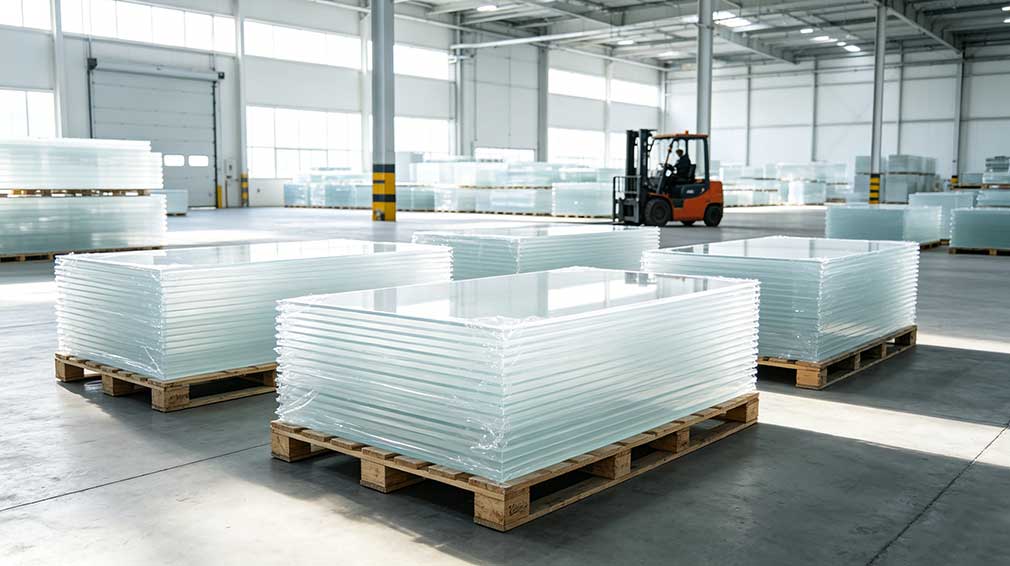
Standard 1220*2440 acrylic sheets are designed to fit perfectly into standard shipping containers and pallets. A 40-foot shipping container can be loaded with a large number of these sheets in a very space-efficient manner. This maximizes the number of units per container, reducing the shipping cost per sheet.
Custom-sized sheets, due to their non-standard dimensions, often do not pack as efficiently. They may require special packaging or may not fill a container to its full capacity, leading to higher shipping costs per unit. For Malaysian buyers importing from overseas, these additional logistics costs can be substantial.
Standard 1220*2440 acrylic sheets are typically in stock at major acrylic wholesale distributors and manufacturers. This means that buyers in Malaysia can often receive their orders much faster than if they were to wait for a custom-sized production run.
Custom orders, on the other hand, require a longer lead time for production, shipping, and delivery. In some cases, the wait can be several weeks or even months. This delay can disrupt production schedules and increase holding costs for businesses, making custom sizes not just more expensive but also less efficient.
Producing custom acrylic sheets often requires new or modified tooling, such as cutting dies or molds. These tooling costs can be significant and are usually passed on to the buyer, especially for smaller orders. Even if the tooling is already available, there is still a cost associated with setting up and calibrating the machinery for the custom size.
Acrylic manufacturers typically impose higher Minimum Order Quantities (MOQs) for custom-sized sheets. This is because producing a small number of custom sheets is not cost-effective for them. For buyers in Malaysia, especially small and medium-sized enterprises (SMEs), these high MOQs can be a significant barrier, forcing them to purchase more material than they need and increasing their upfront costs.
Custom orders may also carry higher quality control risks. Since the production process is not as standardized, there is a greater chance of errors or inconsistencies in the final product. This can lead to delays, rework, and additional costs for the buyer. In contrast, standard 1220*2440 acrylic sheets undergo rigorous quality checks as part of the automated production process, ensuring a consistent and reliable product.
While standard 1220*2440 acrylic sheets are almost always cheaper, there are situations where a custom size is necessary. For example:
In such cases, it is crucial for Malaysian buyers to work closely with a reputable acrylic manufacturer or supplier to understand the full cost implications and to ensure that the custom size is truly necessary.
In conclusion, standard 1220*2440 acrylic sheets are almost always cheaper than custom sizes for Malaysian buyers. The cost advantage stems from significant economies of scale, optimized production processes, reduced material waste, and more efficient logistics and supply chain management. Additionally, custom sizes often come with hidden costs such as tooling, higher MOQs, and longer lead times.
While there are valid reasons to choose a custom size for specific applications, Malaysian buyers should always consider the cost benefits of using standard-sized sheets first. By working with reliable acrylic wholesale distributors or directly with reputable manufacturers like a Chinese acrylic factory, buyers can access high-quality standard 1220*2440 acrylic sheets at the most competitive prices, helping them to reduce costs and improve their bottom line.
So, for most projects in Malaysia, the answer is clear: standard 1220*2440 acrylic sheets are the more economical choice.
